Does it feel like you’re the system?
The one who remembers everything, keeps everything moving, and holds it all together.
If work only runs because you remember it, follow it up or fix it, you’re not running a system. You’ve become one. This free guide walks you through one system in your business, step by step, so you can see which parts are holding it up and which part is quietly leaning on you.
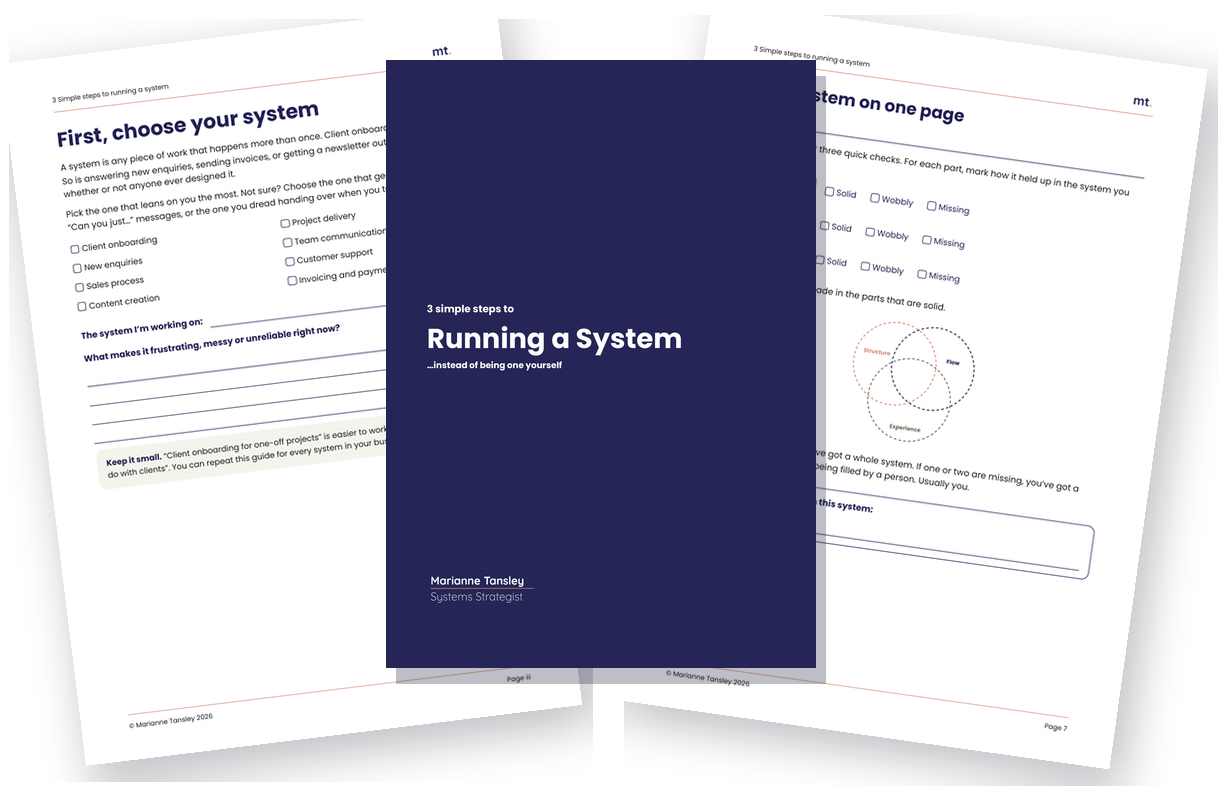
Pick one system. Look at it through all three.
A system that runs without you needs Structure, Flow and Experience working together. When one is weak or missing, the system leans on a person to fill the gap, and that person is usually you.
Check where this system’s work lives, then give it one home and a simple rule for what goes in it, so finding things stops depending on your memory.
Check how its work moves, then give it one front door, so requests stop landing in five different places.
Check how it feels to the people using it, then redesign one moment, so they know they’re in good hands without asking you.

Hi, I’m Marianne
I spent more than 20 years in the engine room of other people’s businesses, quietly becoming the system everything relied on. Remembering, following up, knowing where everything lived, making sure nothing slipped through the cracks.
For a long time I thought that was just part of being good at my job. Now I know that when work depends on one person remembering everything, the fix lives in the system, and systems can be changed.
This guide is where I’d love to help you start.
One system. Three steps. See where it’s leaning on you.
Less chasing, less mental load, and a bit more breathing room, starting with the system that needs it most.
Yes, send me the guideDoes it feel like you’re the system?
The one who remembers everything, keeps everything moving, and holds it all together.
If work only runs because you remember it, follow it up or fix it, you’re not running a system. You’ve become one. This free guide walks you through one system in your business, step by step, so you can see which parts are holding it up and which part is quietly leaning on you.
Pick one system. Look at it through all three.
A system that runs without you needs Structure, Flow and Experience working together. When one is weak or missing, the system leans on a person to fill the gap, and that person is usually you.
Check where this system’s work lives, then give it one home and a simple rule for what goes in it, so finding things stops depending on your memory.
Check how its work moves, then give it one front door, so requests stop landing in five different places.
Check how it feels to the people using it, then redesign one moment, so they know they’re in good hands without asking you.
Hi, I’m Marianne
I spent more than 20 years in the engine room of other people’s businesses, quietly becoming the system everything relied on. Remembering, following up, knowing where everything lived, making sure nothing slipped through the cracks.
For a long time I thought that was just part of being good at my job. Now I know that when work depends on one person remembering everything, the fix lives in the system, and systems can be changed.
This guide is where I’d love to help you start.
One system. Three steps. See where it’s leaning on you.
Less chasing, less mental load, and a bit more breathing room, starting with the system that needs it most.
Yes, send me the guide